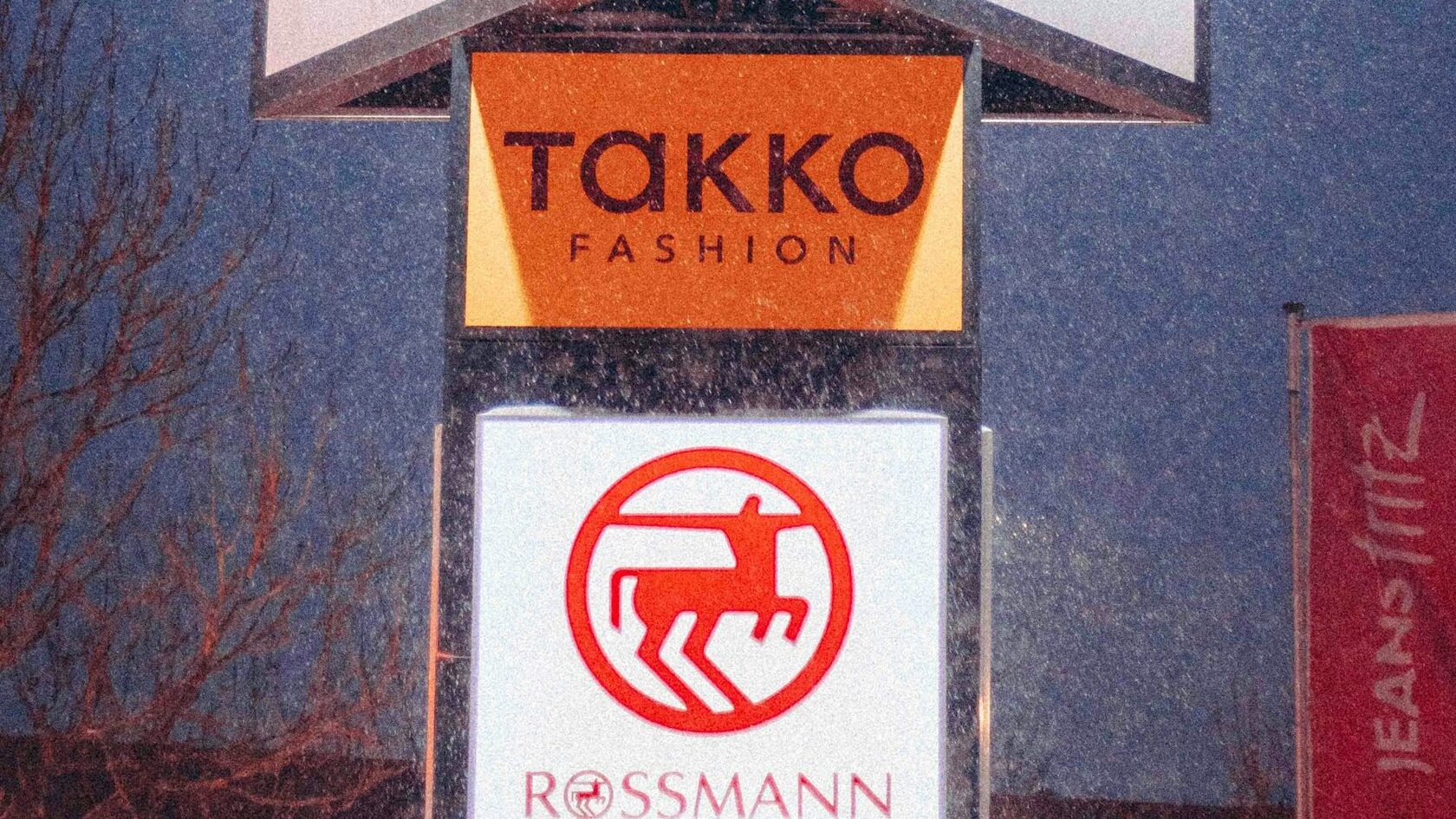
Rossmann tells landlords it wants to trade beside a full-range supermarket or a food discounter, together covering customers' daily needs — which makes it a natural tenant for food-anchored retail parks. Germany's most widespread drugstore chain — 2,342 German stores and €10.5 billion of German revenue in 2025 — reported €2.5 billion of group equity and no net financial debt at the end of 2025. In our experience its leases are signed by Dirk Rossmann GmbH; the risk to price is the link to the anchor, not the covenant.
Key takeaways
• Rossmann turned over €16.6 billion in 2025 (+8.5%), €10.5 billion in Germany; equity rose to €2.5 billion, with no net financial debt.
• The Rossmann family holds the majority, A.S. Watson (CK Hutchison) 40% since 2004; we found no public credit rating.
• Rossmann seeks about 400–1,000 m² of sales area in towns from about 6,000 inhabitants, next to a supermarket or a discounter; its stores averaged 626 m² in 2025.
• Rossmann's 2 million customers a day in Germany are roughly 850 per store (our calculation). Yet the network keeps moving: 75 new German stores were budgeted for 2025, against a net gain of 31 (our calculation).
Family control and no net financial debt back the covenant
Exhibit 1. Rossmann runs 2,342 German stores with no net financial debt
The balance sheet behind the lease is conservative. Equity rose from €2.3 billion to €2.5 billion in 2025; the year closed without net financial debt, as in previous years, and all investment came from cash flow. For 2026 Rossmann plans €613 million of investment and 342 new stores, 63 of them in Germany.
Control rests with the founding family. Dirk Rossmann opened Germany's first self-service drugstore in Hanover in 1972; his son Raoul is spokesman of the four-member management (2026). A.S. Watson, part of CK Hutchison, bought its 40% stake in 2004; we found no announced change to that holding.
Dirk Rossmann GmbH signs, and the family also buys property
Rossmann asks for offers to be sent to the expansion department of Dirk Rossmann GmbH in Burgwedel; in our experience, that company signs German leases itself. In 2016, for example, the town of Meinerzhagen announced a lease with Dirk Rossmann GmbH for a former REWE store, handed over as a shell for Rossmann to fit out. The German stores are branches run by Rossmann's own staff, so no independent merchant stands between landlord and covenant (Part 2).
One feature is unusual: the family-owned Dirk Rossmann Immobiliengruppe buys and develops property as a long-term investor. It looks for buildings with at least 700 m² at ground level and plots of at least 1,000 m² in towns from 5,000 inhabitants, preferably near a supermarket or discounter. The family can bid for the kind of asset its drugstores rent.
Rossmann wants to stand next to a supermarket or a discounter
Exhibit 2. Rossmann wants about 400–1,000 m² beside a supermarket or food discounter
Source: Rossmann expansion pages and brochure (January 2025), accessed 10 October 2026.
Rossmann brings traffic of its own: 2 million customers a day in Germany in 2025, 608 million over the year. It promises landlords "high rent security" and "a footfall increase through advertising intensity". Stores are growing slowly: average sales area rose from 616 m² in 2023 to 626 m² in 2025, with 12 above 1,000 m². The new design, in 80 stores in 2025, is to reach more than 300 by the end of 2026.
Options can be short, and the tenant decides
Rossmann publishes no standard lease. In September 2026 a Dr. Peters fund reported that Rossmann had exercised a further extension option for about 800 m² in its Kaufland-anchored neighbourhood centre in Seelow. The option extends the lease by "at least three additional years". Such short options let the tenant decide in small steps.
In our experience, Rossmann's leases follow the food retailers' pattern: indexation only above a threshold and often only in part, and roof and structure with the landlord (Part 10). The pattern also allows subletting within the group and gives the tenant extension options (Part 7).
The risks are anchor dependence and a network in motion
Anchor. Rossmann chooses sites for their food anchor. If the supermarket or discounter leaves, the drugstore's case for staying weakens.
Relocation. Rossmann budgeted €50 million for 75 new German stores in 2025, plus €113 million for modernisation; its German network grew from 2,311 to 2,342 stores, a net gain of 31 (our calculation). In our reading, part of the expansion replaces older stores.
Covenant. Store count is not a balance sheet: Schlecker, then Europe's largest drugstore chain, filed for insolvency in January 2012 (Part 12). Rossmann's equity and absence of net financial debt carry its covenant.
Channel. Online sales grew at a double-digit rate in 2025; pick-up stations, planned for 730 stores by the end of 2026, bring part of that demand back into the store.
Implications for investors
1. Underwrite the anchor and the drugstore together. Rossmann chooses its sites for the supermarket or discounter next door, so the anchor's remaining term is part of the drugstore's risk.
2. Test the unit against Rossmann's criteria. About 400 to 1,000 m² of sales area, a 10.5 m frontage and 150 to 200 m² of ancillary space are the yardstick for renewal.
3. Count the Rossmann family among the potential buyers. Its property group buys retail property near food anchors, which can matter at exit.
Before you buy a Rossmann store:
• Confirm that the lease names Dirk Rossmann GmbH, Burgwedel, as tenant, and read the subletting clause.
• Compare the drugstore's fixed term and options with the anchor's, and check whether any clause links them.
• Measure sales area, ancillary space and frontage against Rossmann's criteria.
• Ask whether the store has, or will receive, the new design and a pick-up station.
• Check the indexation threshold, the share passed on and who pays for roof and structure (Part 10).
• Obtain the complete lease file, every option exercise included (Part 7).
Sources: Dirk Rossmann GmbH, Geschäftsentwicklung 2025 und Ausblick 2026 (April 2026) and its 2024 edition; unternehmen.rossmann.de pages "Geschäftszahlen", "Unternehmensporträt", "Expansion" (with brochure) and "DR Immobilien" (accessed 10 October 2026); LEBENSMITTEL PRAXIS, 23 April 2026 and 14 January 2022; Handelsblatt, 23 April 2026; Börsen-Zeitung (dpa-afx), 8 January 2026; CK Hutchison, 24 August 2004; apotheke adhoc, 2 April 2014; Dr. Peters Group, 21 September 2026; Stadt Meinerzhagen, 30 May 2016; Bundeskartellamt, 28 September 2026; Gordon Real Estate Group experience.
Photo: Arlind Photography / Unsplash
This profile is general information and not investment advice. Company figures are as published by the company or reported in the trade press on the dates stated.