An investor in a hypermarket (SB-Warenhaus) is buying above all the remaining lease term and the chance of finding a successor for a building this large. The hypermarket is the only one of the main food formats whose turnover fell in 2025 — by 2.6%, to €18.6 billion (EHI). The break-up of Real showed how narrow the circle of successors is: of 276 stores, the two natural candidates could take 116 at best (our calculation).
Hypermarkets are losing turnover while the other formats grow
Exhibit 1. Of the four main food formats, only hypermarkets saw turnover fall in 2025 — by 2.6%
The hypermarket share is our calculation: €18.6 billion out of €217.8 billion. Sources: BNP Paribas Real Estate (store counts based on HDE data), EHI.
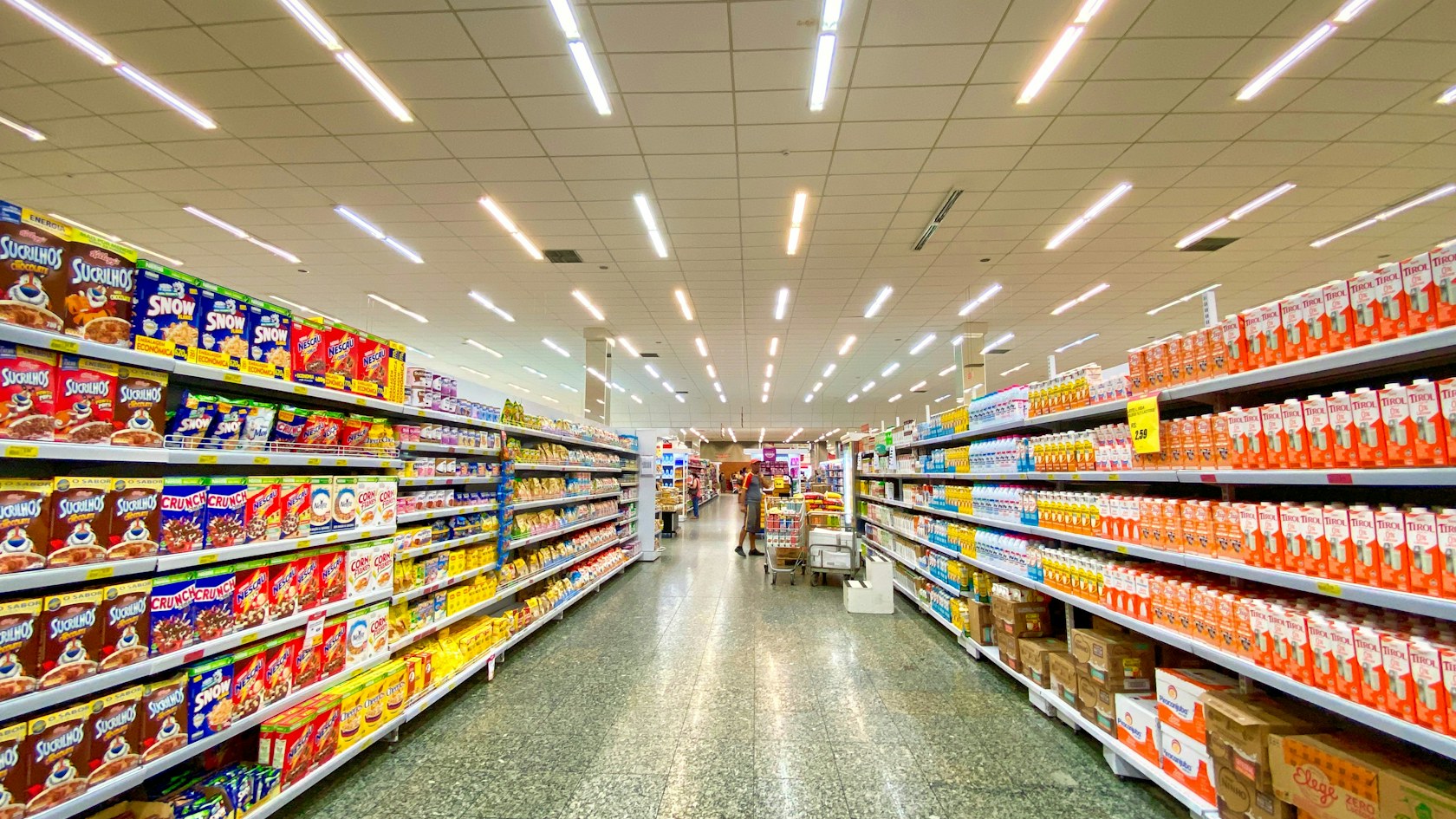
A hypermarket has none of the "silent reserve" that enlargements give supermarkets and discounters: by BNP's estimate, its area already matches the chains' requirement of 8,000 m² (see Part 3 of the series German Prime Retail). It is a self-service store with at least 5,000 m² of sales area and the widest range in food retail: Marktkauf hypermarkets (EDEKA) carry about 60,000 items. Germany has 689 of them, with an average rental area of 7,892 m² (BNP Paribas Real Estate).
Operators are few. Kaufland runs 790 stores in Germany and looks for sites with at least 2,500 m² of sales area. Marktkauf has 112 stores with an average sales area of 5,800 m², and Globus had 47 hypermarkets in 2020.
The break-up of Real showed how narrow the circle of successors is
Even in the best case, the two natural successors — Kaufland and Globus — could take 116 of Real's 276 hypermarkets, fewer than half (our calculation). Metro sold all 276 stores to SCP in 2020; in the 2018/2019 financial year they had generated about €7 billion of turnover. The Bundeskartellamt, Germany's competition authority, cleared Kaufland to take over up to 92 of the 101 stores it had notified, and Globus up to 24. The authority noted that in some cases Kaufland still had to reach agreement with the existing landlords.
The remaining chain, Mein Real, filed for insolvency in September 2023 and closed its last 49 stores in March 2024; Kaufland intended to integrate up to 23 of them into its network (see Part 12).
The sources offer no yield benchmark for hypermarkets
BNP Paribas Real Estate estimates yields for standalone supermarkets and discounters (5.00%) and for retail parks (4.75%), but not for hypermarkets, and these figures cannot be transferred to a hypermarket. Hypermarkets pay less rent per m² than discounters and large supermarkets: in a Hahn Group sample of more than 700 food stores, hypermarkets together with supermarkets pay about €11.20 per m² a month.
In our experience, the lease runs for about 15 years on the tenant's standard form, and the chain decides on renewal store by store. The fallback is to divide the building into several stores. But the special zone (Sondergebiet) usually limits the sales area and the range of goods, and the roof, car park and building services make such a conversion expensive.
Implications for investors
1. Value a hypermarket on its remaining term, not on other formats' benchmarks. BNP's benchmarks — 5.00% for standalone supermarkets and discounters, 4.75% for retail parks — do not apply to this format, and a hypermarket has no "silent reserve" from enlargement.
2. Name the successor before you buy, not after the tenant leaves. Real shows that even at best the two natural successors could take 116 of 276 stores (our calculation), and the Bundeskartellamt did not clear Kaufland for every store it had notified.
3. Cost the division of the building in advance. The special zone usually limits the sales area and the range of goods, and the roof, car park and building services make a conversion into several stores expensive.
What to check:
• Establish the remaining fixed term, the options and which group company signed the lease.
• Request the store's turnover trend, if the tenant discloses it, and calculate rent as a share of turnover.
• Read the special-zone plan: the maximum sales area, the permitted range of goods and whether the building may be divided.
• Assess who else — Kaufland, EDEKA, Globus or REWE — could take over the building, and whether competition law would stand in the way.
• Check the condition of the roof, car park and building services, and estimate the cost of dividing the building into several stores.
See also: Large supermarket as an investment; Retail park as an investment; Drugstore as an investment.
Sources: BNP Paribas Real Estate, grocery investment market report for Germany, Q4 2025 (store counts based on HDE data), and retail investment market report, Q3 2026; EHI Retail Institute (as reported by Lebensmittel Rundschau, 3 September 2026; the 5,000 m² threshold: EHI classification as reported by Regierungspräsidium Gießen, 2015); EDEKA, group report 2025; Schwarz Gruppe, data for the 2025 financial year, and Kaufland, site requirements (2026); Bundeskartellamt, press release of 22 December 2020; LEBENSMITTEL PRAXIS, 28 March 2024; Hahn Group, Retail Real Estate Report 2026/2027 (as reported by LEBENSMITTEL PRAXIS, 3 September 2026); German Prime Retail series, Parts 3 and 12; Gordon Real Estate Group experience.
Photo: Nathália Rosa / Unsplash
This page is general information and not investment, legal or tax advice.