By BNP Paribas Real Estate's estimate, a retail park (Fachmarktzentrum) costs more than a standalone food store: the prime retail-park yield is 4.75%, against 5.00% for standalone supermarkets and discounters (Q3 2026). For that premium the buyer gets several tenants instead of one — and management that a standalone store does not need. Compare these figures only within one broker's data: CBRE ranks the formats the other way round.
BNP prices retail parks above standalone stores, CBRE below
Exhibit 1. Yields of 4.75% against 5.00% at BNP but 4.9% against 4.6% at CBRE: the brokers rank the formats in opposite order
According to BNP, retail parks usually sell for slightly more than standalone stores. CBRE ranks the formats the other way round, so yields should be compared only within one broker's data (see Part 1 of the series German Prime Retail).
The format's price is sensitive to interest rates. Since the end of 2021 the prime retail-park yield has risen, by BNP's figures, from 3.50% to 4.75%. At unchanged rent, that means a loss of about a quarter of the value (see Part 12).
Demand is concentrated on food-anchored retail parks
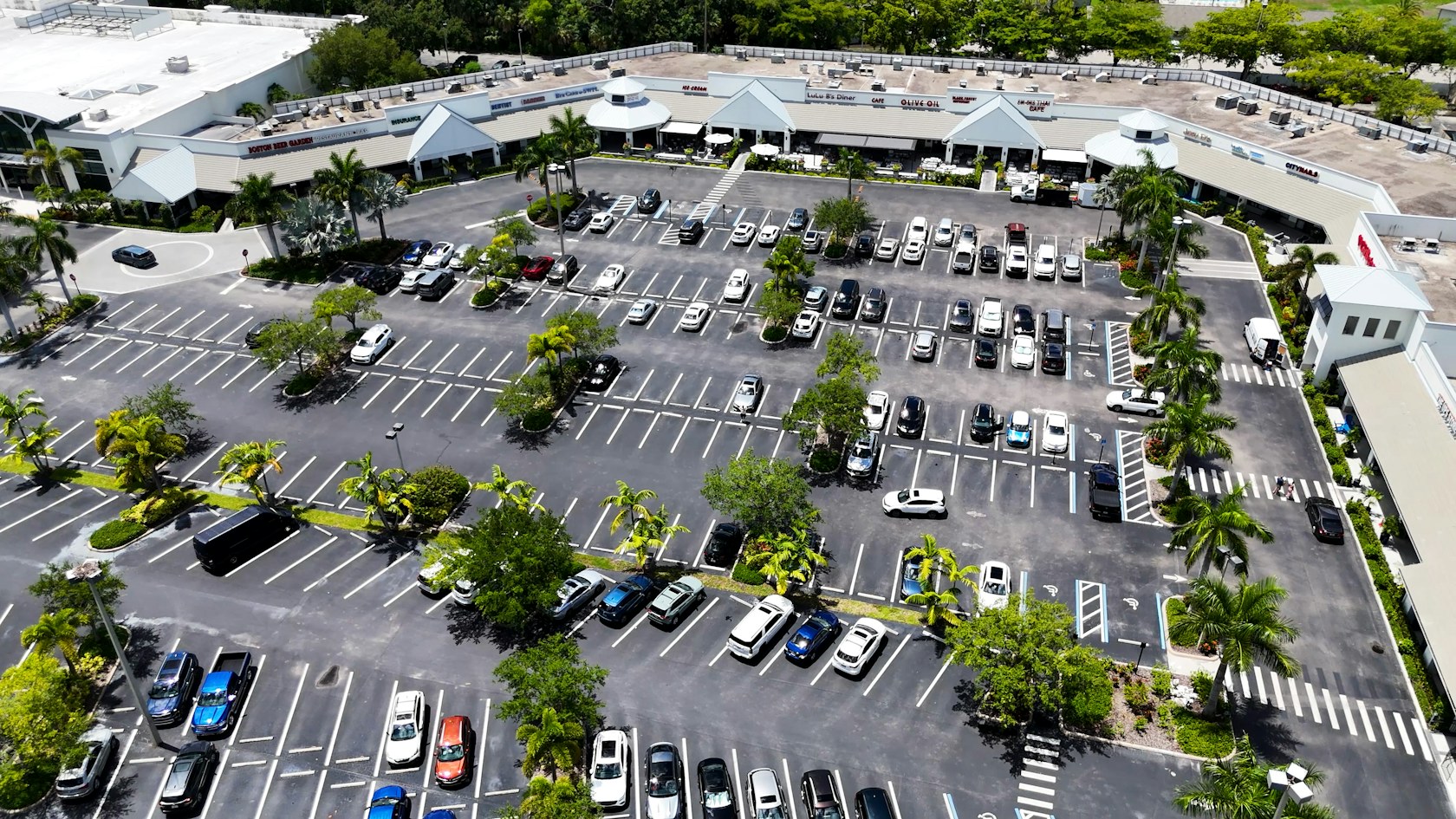
A retail park is a group of specialist stores sharing one car park, and investor demand is concentrated on food-anchored parks. In these, a supermarket or discounter sits next to a drugstore and to shoe, clothing and homeware stores. BNP publishes neither the number nor the average size of retail parks, and its transaction statistics count only food-anchored centres. Together with neighbourhood centres, they attracted about €1 billion in 2025, roughly a third of investment in food and large-scale retail property. Deals included the Three Lions portfolio of three retail parks (about €70 million, 2025) and the Powerfood portfolio of 37 food stores and retail parks (about €200 million, Q1 2026).
In a Hahn Group survey, 88% of investors ready to buy prefer retail parks and neighbourhood centres. The chains also seek out such sites deliberately: in a retail park dm wants at least 500 m² of sales area and about 50 parking spaces of its own. ALDI Nord looks for 1,500–2,000 m² of total area with a frontage of 20–30 m, and Rossmann for centres with a broad mix of tenants.
A retail park planned as one unit is legally a shopping centre
The Federal Administrative Court generally treats as a shopping centre a complex that was planned, financed, built and managed as a single unit from the outset. A group of individual stores becomes a shopping centre if close proximity is joined by at least a minimum of shared organisation and cooperation visible from outside (BVerwG, judgment of 27 April 1990, 4 C 16.87). Shopping centres (Einkaufszentren) are permitted only in core areas or special zones, regardless of the size of the individual stores (§ 11(3) sentence 1 no. 1 BauNVO). In our experience, the special-zone plan for a retail park usually fixes the area and range of goods of each unit. Replacing a shoe shop with a food store may then require an amendment to the plan.
Several leases turn ownership into constant negotiation
The owner of a retail park has to negotiate almost continuously. The lease with the food anchor, in our experience, runs for 15 years, and those with non-food tenants are markedly shorter, so the terms expire at different times. The owner also allocates operating costs among many tenants (see Part 10) and makes sure the smaller stores do not lose the anchor's customers.
Implications for investors
1. Test the price for sensitivity to interest rates. Since the end of 2021 the prime retail-park yield has risen, by BNP's figures, from 3.50% to 4.75%; at unchanged rent, that means a loss of about a quarter of the value.
2. Establish whether the park is, in law, a shopping centre. The court generally treats a complex planned, financed, built and managed as a single unit as a shopping centre, and such centres are permitted only in core areas or special zones.
3. Build the valuation around the food anchor. Demand and deal statistics centre on food-anchored parks: calculate the anchor's share of the rent and check when the smaller tenants' leases expire.
What to check:
• Establish the planning status — shopping centre or special zone — and the maximum areas and ranges of goods per unit.
• Calculate the share of rent from the food anchor and draw up the lease expiry schedule.
• Assess the financial position of the non-food tenants and their dependence on online retail.
• Check how operating costs and car-park costs are allocated among the tenants.
• Compare yields only with benchmarks from the same broker.
See also: Neighbourhood centre as an investment; Drugstore as an investment; Discount store as an investment.
Sources: BNP Paribas Real Estate, grocery investment market reports for Germany, Q4 2024 and Q4 2025, and retail investment market reports, Q4 2021, Q2 and Q3 2026; CBRE, retail investment, Q3 2026; Cushman & Wakefield, MarketBeat Einzelhandel Investment, Q2 2026; Hahn Group, Retail Real Estate Report 2026/2027 (as reported by LEBENSMITTEL PRAXIS, 3 September 2026); site requirements of dm, ALDI Nord and Rossmann (2025–2026); BauNVO § 11(3); BVerwG, judgment of 27 April 1990, 4 C 16.87; German Prime Retail series, Parts 1, 10 and 12; Gordon Real Estate Group experience.
Photo: Michael Moloney / Unsplash
This page is general information and not investment, legal or tax advice.