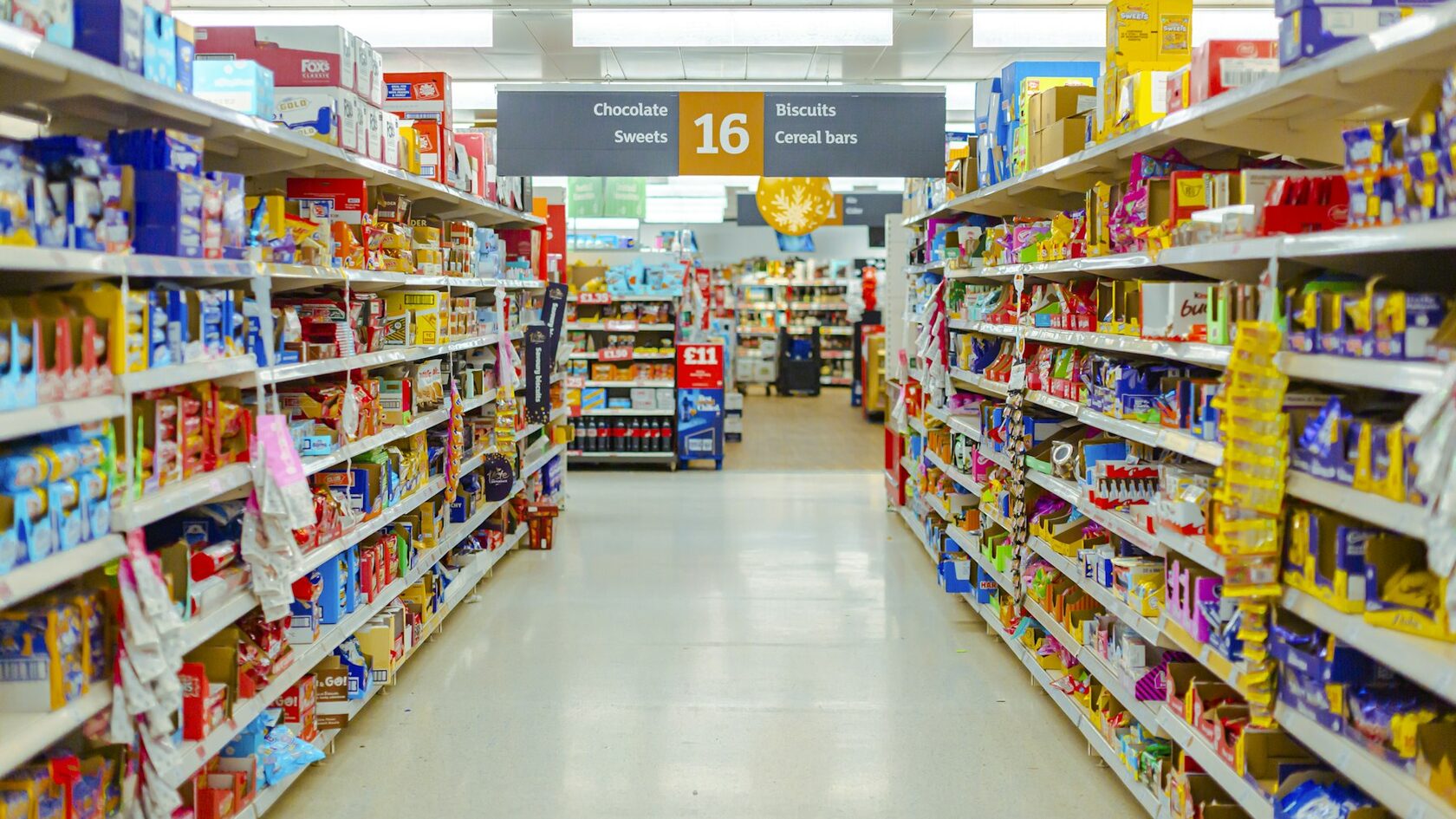
Two traits of Alnatura matter to a landlord: a small format in cities of 40,000 inhabitants or more, and a tendency to move to larger premises nearby. Founded by Götz Rehn in 1984, the Darmstadt-based chain runs 157 organic supermarkets in 73 German cities, with an average sales area of 625 m² (October 2026). Its revenue for the 2024/25 financial year was €1.274 billion net, a figure that also covers Alnatura-brand products sold through about 15,000 partner stores in 18 countries.
Key takeaways
• Alnatura turned over €1.274 billion net in the financial year to 30 September 2025 (+6.6%); we found no public credit rating.
• The chain wants to rent 350–800 m² of sales area plus 120–200 m² of ancillary space, with a frontage of at least 10 m. It looks for busy central and district locations, or retail parks next to food stores.
• From 2024 to 2026 at least four stores moved to larger premises in the same towns, gaining 150–300 m², and Alnatura itself is offering its unit in Neutraubling for re-letting.
Alnatura is a producer and a retailer in one company
About 1,400 Alnatura-brand products are sold both in its own stores and by partners, from EDEKA and Globus to Rossmann. From mid-October 2026 up to 200 of them are reaching REWE stores. The company employs 3,730 people, and its founder, Götz Rehn, is still part of the management. In 2026 a second distribution centre for dry goods, of 30,000 m² in Groß-Rohrheim, joined the one in Lorsch; it supplies Alnatura's own stores.
Exhibit 1. Small stores, a big brand: 157 supermarkets averaging 625 m²
Offers go to the central company — so verify the signatory
Offers of space go to Alnatura Produktions- und Handels GmbH, the chain's main company and the one named in its imprint. If it signed the lease, the whole company stands behind it rather than a single-store entity, so check the signatory's details. The 2026 deals show whom Alnatura signs with: owners of existing buildings in urban neighbourhoods. They include WALTER Beteiligungen und Immobilien AG in Augsburg (about 970 m²), Streit Liegenschaften in Freiburg (about 800 m²) and the WATZL Group in Stuttgart (about 720 m²).
Alnatura seeks small urban units — and moves when it finds larger ones
Alnatura's requirements (October 2026) call for cities of 40,000 inhabitants or more and 350–800 m² of sales area, ideally at street level, plus 120–200 m² of ancillary space. The unit needs long walls for shelving, a frontage of at least 10 m and lorry access; alternatively, Alnatura looks for plots from 2,500 m² that it can develop for itself. A store therefore usually stays below the 800 m² threshold for large-scale retail (see Part 3 of the series German Prime Retail).
Exhibit 2. Alnatura grows by moving: four relocations gained 150–300 m² each, 2024–2026
Lease terms are not published, but Alnatura promises the long term
Alnatura promises landlords a "long-term partnership" and "reliable creditworthiness", its own store-design concept and regular modernisation during the lease — a self-description, not published terms. The owner of the Stuttgart building called Alnatura a "long-term-oriented" tenant (October 2026). Beyond that, our general experience of food retail holds. It points to a fixed term with extension options, indexation above a threshold with partial pass-through of inflation, and roof and structure (Dach und Fach) with the landlord (Part 10).
The risk is relocation, not the tenant's ability to pay
The main risk for a small Alnatura store is a larger unit nearby: that is where the chain goes, as the four relocations show. If its lease is still running, the chain looks for a new occupier. One example is an 809 m² unit in a retail park in Neutraubling (built in 2017), which Alnatura itself was offering for re-letting in October 2026. The lease decides on what terms that is possible. The segment is uneven: in Cologne, Alnatura took over premises after another organic chain, SuperBioMarkt, closed its store there in April 2024.
Implications for investors
1. Measure the store by Alnatura's own yardstick. A unit at the lower end of the 350–800 m² range with no room to expand is a candidate for relocation at renewal.
2. Value the location above the logo. The chain pays for a busy street and a frontage; if Alnatura leaves, these will decide who takes the unit.
3. Check the subletting and transfer clauses. They decide who will occupy the unit if the tenant moves before the lease ends.
Before you buy an Alnatura store:
• Was the lease signed by Alnatura Produktions- und Handels GmbH itself?
• How much sales and ancillary space does the unit have, and how wide is the frontage?
• Is there a larger unit nearby to which the chain could move?
• What does the lease say about subletting and transferring the unit to third parties?
• Who pays for modernisation, and who owns the store fittings?
• How many years remain on the term, and are there extension options?
See also: dm as a Tenant; Rossmann as a Tenant; who is responsible for roof and structure (Dach und Fach).
Sources: Alnatura, facts-and-figures page (as of 1 October 2026) and expansion page "Expansion sucht Gewerbeimmobilien" (October 2026); Alnatura press releases of 16 April, 2 May, 3 September and 3 December 2024, 4 December 2025, and 10 March, 1 June, 2 July, 15 September and 1 October 2026; Bundeskartellamt, press release of 28 September 2026; LEBENSMITTEL PRAXIS, 4 December 2025; Gordon Real Estate Group, "German Prime Retail", Parts 3 and 10; Gordon Real Estate Group experience.
Photo: Jack Lee / Unsplash
This page is general information and not investment, legal or tax advice. Company figures are as published by the companies or reported in the trade press on the dates stated.