Two main ones: corporate income tax — 15% plus the solidarity surcharge, 15.825% in all (10.55% by 2032) — and trade tax, which a GmbH owes by virtue of its legal form: 3.5% of trade income multiplied by the municipal multiplier. Without relief, together they take roughly 25–33% of profit. Only the extended reduction removes rental income from trade tax entirely — if, for the whole year, the company does nothing but manage its own real estate, within the narrow allowances the law permits.
Corporate income tax is falling: 15.825% now, 10.55% from 2032
A German limited-liability company (GmbH) pays corporate income tax (Körperschaftsteuer) of 15% of taxable profit plus a solidarity surcharge (Solidaritätszuschlag) of 5.5% of that tax. The law already cuts the rate by one percentage point a year from 2028, to 10% in 2032 (§ 23(1) KStG). All of a GmbH's income counts as business income (§ 8(2) KStG), so the exemption for gains on a sale after ten years of ownership, available to private individuals (§ 23 EStG), does not apply to it. Loan interest and depreciation (AfA) on the building — 3% a year (§ 7(4) EStG) — reduce the base. As a result, in the example in Part 11 of the series German Prime Retail, a GmbH funded by a shareholder loan pays no corporate income tax for ten years.
A GmbH owes trade tax by virtue of its legal form
A GmbH's activity always counts, in full, as a trade (§ 2(2) GewStG): the argument that letting property is not a business helps individuals, not companies. Trade tax (Gewerbesteuer) is 3.5% of trade income multiplied by the municipal multiplier, the Hebesatz (§§ 11, 16 GewStG). In most municipalities the multiplier is roughly 300–500%, and the statutory minimum rises from 200% to 280% as of 2027. A GmbH has no €24,500 allowance, and the tax itself does not reduce the corporate income tax base (§ 4(5b) EStG). Without the extended reduction, a quarter of interest and other financing costs above €200,000 a year is added back to the base (§ 8 no. 1 GewStG).
Exhibit 1. Without the extended reduction, taxes take roughly 25–33% of a GmbH's profit
The calculation is simplified: both rates are applied to the same base, with the multiplier held constant.
The extended reduction frees rental income, but only on strict conditions
On application, a company that exclusively manages and uses its own real estate (or, in addition, its own capital assets) deducts from its trade income the part attributable to that management (§ 9 no. 1 sentence 2 GewStG). The law tolerates two kinds of side income, each capped as a share of the year's rental receipts: renewable electricity and electric-vehicle charging up to 20%, other direct services to tenants up to 5%. The relief is excluded if the property serves a shareholder's business in whole or in part.
The Federal Fiscal Court has added two rules. Letting operating equipment (Betriebsvorrichtungen) together with the building forfeits the relief entirely. The court allowed an exception for a necessary building component — a goods lift — within quantitative limits (BFH, judgment of 25 September 2025, IV R 31/23). In a supermarket, the classic trap is refrigeration plant (Part 9).
Under the second rule, the conditions must hold for the whole year. A company that sold all its real estate with transfer at the start of 31 December lost the relief for that entire year (BFH, judgment of 17 October 2024, III R 1/23).
Purchase and profit distribution bring further taxes
On purchase, the GmbH pays real estate transfer tax (Grunderwerbsteuer) of 3.5–6.5% of the price, depending on the federal state. A supermarket lease usually passes property tax (Grundsteuer) on to the tenant (Part 10). Profit retained in the company is taxed only at company level. Paid out as a dividend, it bears 26.375% withholding tax, which EU rules or a double tax treaty can reduce.
Implications for investors
1. Calculate the after-tax yield using the multiplier of the specific municipality. Without the extended reduction, taxes take 26.325% of profit in 2026–2027 at a multiplier of 300%, and as much as 33.325% at 500%.
2. Check what is let together with the building. Operating equipment let with it — in a supermarket, above all refrigeration plant — forfeits the extended reduction entirely, and side income must stay within 20% and 5% of rental receipts.
3. Agree the transfer date on a sale with your tax adviser. The conditions for the relief must hold for the whole year: one company that sold all its real estate with transfer at the start of 31 December lost the relief for that entire year.
What to check:
• the multiplier of the municipality entitled to the trade tax, and any announced changes;
• an inventory of everything let with the building — real property separated from operating equipment;
• income from electricity, charging and tenant services against the 20% and 5% limits;
• whether any part of the property serves a shareholder's business;
• the transfer date on a sale — agree it with a tax adviser.
See also: When is interest on a shareholder loan not taxed in Germany?; Do you need a GmbH to buy commercial property in Germany?; How much does it cost to set up and run a GmbH?; Can you sell property in Germany without paying tax?
Sources: §§ 8, 23 KStG; § 4 SolZG 1995; §§ 2, 4, 8, 9, 11, 16, 36 GewStG; §§ 4(5b), 7(4), 23, 43, 43a EStG; § 11 GrEStG; BFH, judgments of 25 September 2025, IV R 31/23, and of 17 October 2024, III R 1/23; the series German Prime Retail, Parts 9, 10 and 11. Legal position as of October 2026.
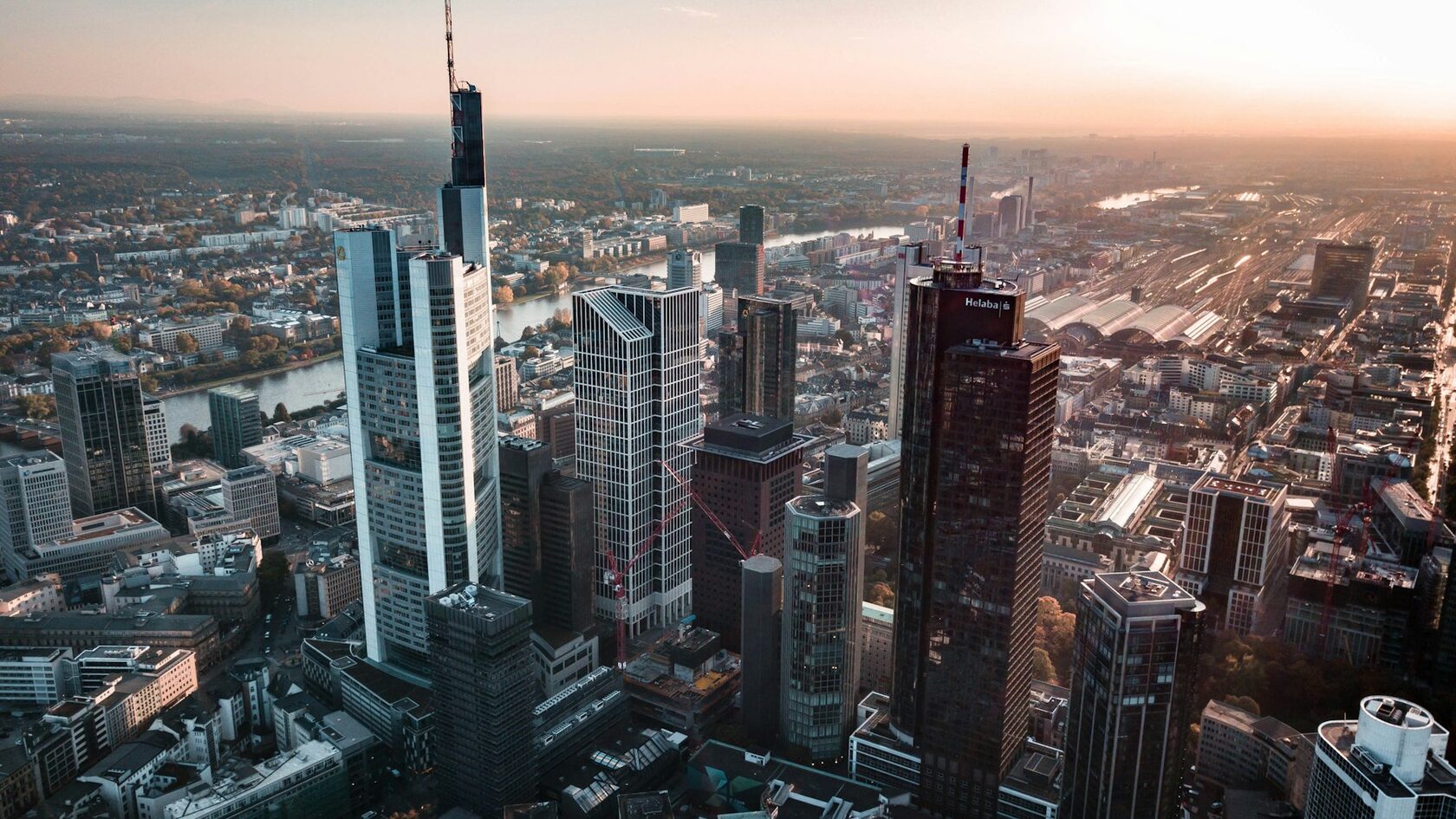
Photo: Jan-Philipp Thiele / Unsplash
This page is general information and not investment, legal or tax advice.