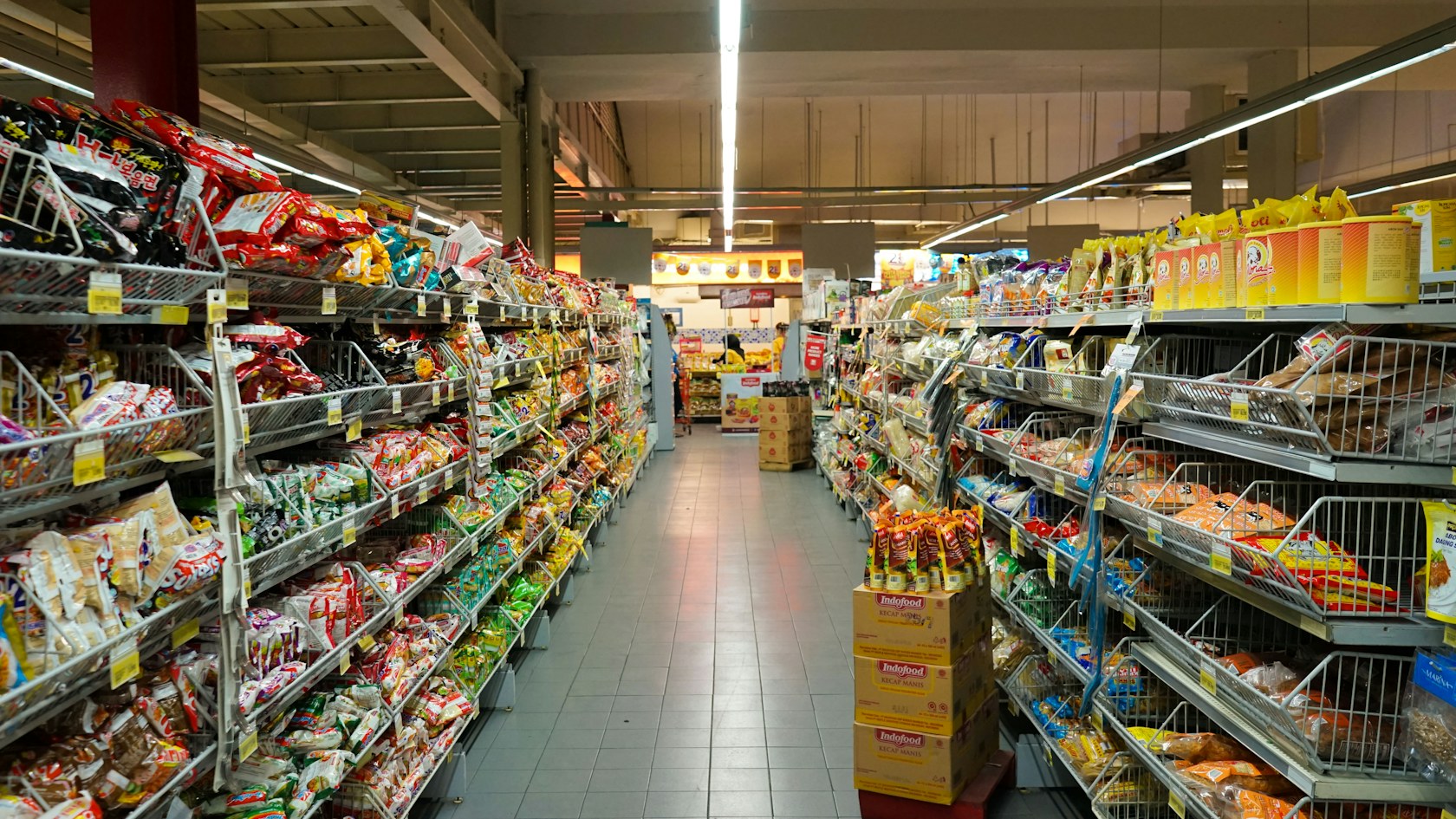
A Lebensmitteldiscounter is a food store with a narrow range of a few thousand fast-selling items at low prices: ALDI, Lidl, Netto Marken-Discount of the EDEKA group, Penny of the REWE group. Discounters took 46.1% of German food-retail turnover in 2025 (EHI), but something else matters more to investors: stores built under the 800 m² sales-area threshold no longer fit today's formats.
What it is
The term is market usage: the law does not define a discounter. Germany has almost 16,000 such stores with an average rental area of 1,250 m², while the chains' expansion profiles call for about 1,500 m² (BNP Paribas Real Estate).
Size also decides the planning regime. A store with more than 800 m² of sales area counts as large-scale (BVerwG, 24 November 2005, 4 C 10.04). If it has more than minor effects on its surroundings, it is permitted only in a core area or a special zone (§ 11(3) BauNVO). For years many discounters were therefore built just below the threshold: 799 m² recurs in development plans (see Part 3 of the series German Prime Retail).
Exhibit 1. ALDI Süd owned about 65% of its stores, and the chains buy and sell portfolios too
Why it matters to investors
The segment is vast, but investors can reach only part of it: ALDI and Lidl own much of the real estate they trade from, and their stores come to market through individual sales and sale-and-leasebacks (Part 4). BNP Paribas Real Estate counts supermarkets and discounters as one category. At the end of 2025 the best properties cost up to 18.5 times annual rent; in the third quarter of 2026 their net initial yield was 5.00%.
The main risk of an old discounter is its format. Growing beyond the threshold usually needs a new permit and often a new development plan (Part 3). Grandfathering (Bestandsschutz) protects the store as approved, not the larger one the tenant will want on renewal. If the plot cannot grow, the chain may move to a new site elsewhere in town (Part 5).
Small discounters of second-tier operators on the edge of a village, often on short leases, are a category of their own: here an independent location study is essential (Part 7).
What to check
• The sales area, recalculated under the court's definition, and the area the development plan permits.
• Whether the store can be extended to the chain's current profile on this plot.
• The fixed remaining lease term, and whether the tenant is preparing a new store nearby.
• The lease signatory and any group guarantee.
• For a store on the edge of a settlement, an independent location study.
Related terms: Vollsortimenter · Großflächiger Einzelhandel · Bestandsschutz · Sale-and-Leaseback
Sources: EHI Retail Institute (as reported by Lebensmittel Rundschau, September 2026); BNP Paribas Real Estate, German food-retail investment market report for Q4 2025 and retail investment market report for Q3 2026; Lebensmittel Zeitung, 17 February 2023; BauNVO § 11(3); BVerwG, judgment of 24 November 2005, 4 C 10.04; Gordon Real Estate Group, "German Prime Retail", Parts 1, 3, 4, 5 and 7. Data as of 10 October 2026.
Photo: Fikri Rasyid / Unsplash
This entry is general information and not legal or tax advice.