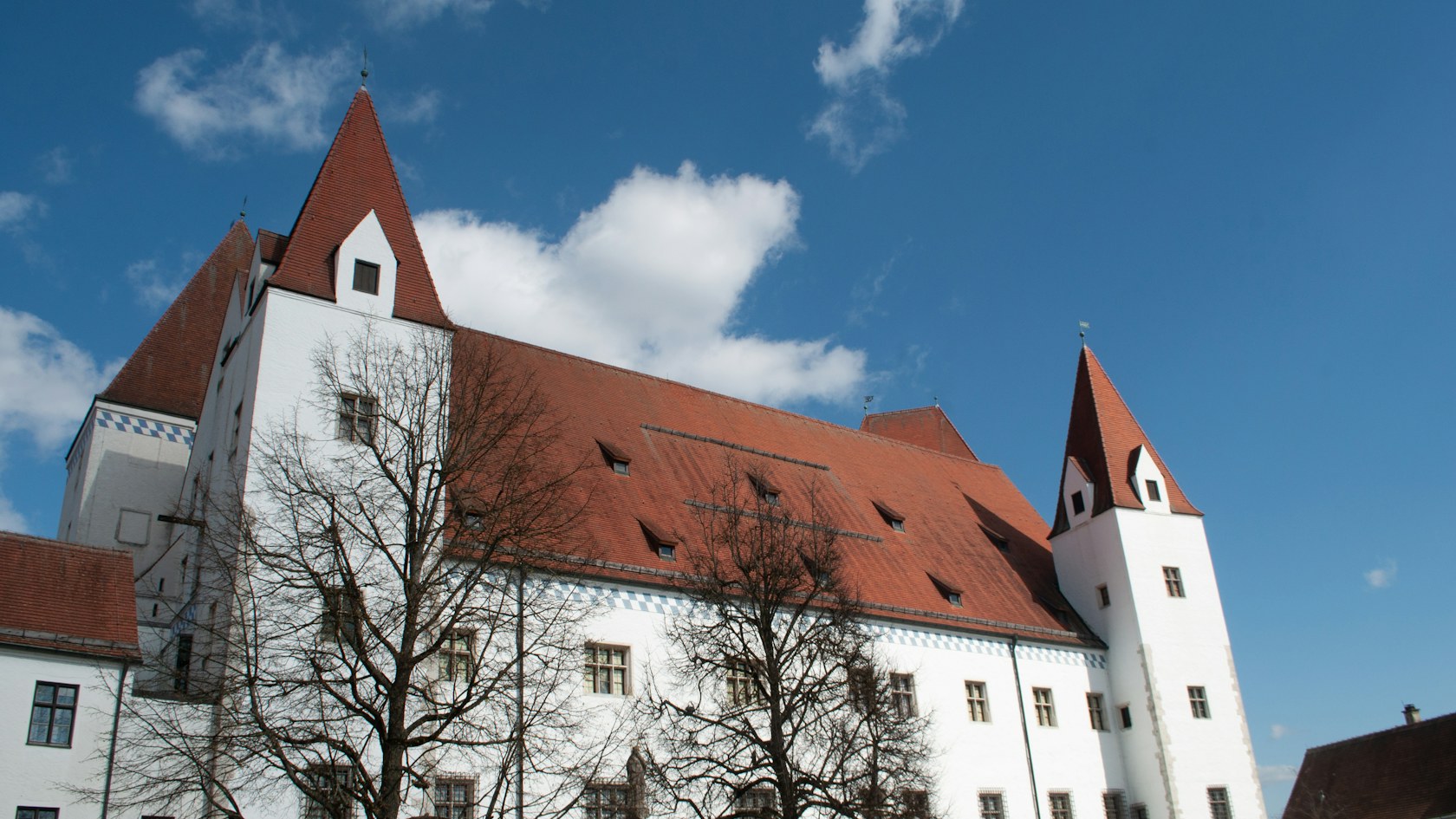
Ingolstadt's wealth is tied to a single industry: Audi has its headquarters here, and the city reports GDP per inhabitant of €140,000, the second highest in Germany. But NIQ counts Ingolstadt among the car-industry cities where purchasing power per head grows markedly more slowly than in the rest of the country. For a supermarket in Bavaria's fifth-largest city (140,799 residents at the end of 2025, Destatis), the population forecast matters more — and real estate transfer tax (Grunderwerbsteuer) here is 3.5%, the lowest in Germany.
The city's income depends on one industry
AUDI AG has its headquarters in Ingolstadt. The city's business portal also names Airbus Defence and Space, Aumovio and MediaMarktSaturn Retail Group, whose parent company is registered in Ingolstadt, among the large employers. According to the city, GDP per inhabitant reaches €140,000 — second in Germany.
Jobs are concentrated in the city: on 30 June 2023 it had 103,482 employees subject to social insurance (sozialversicherungspflichtig Beschäftigte), or 727 per 1,000 residents against a Bavarian average of 441. The net commuter inflow was 38,171 (chamber of commerce IHK für München und Oberbayern, from Bavarian State Office for Statistics data).
The flip side is exposure to one industry. In its review for 2026, NIQ notes that in cities built on car makers and their suppliers, such as Wolfsburg, Baden-Baden and Ingolstadt, purchasing power per head grows considerably more slowly than in other districts. Their index values fall the most.
For a supermarket, the population forecast outweighs the city's wealth
A supermarket's sales volume follows above all the number of people, not their income (see Part 5 of the series German Prime Retail): income shapes the format and the basket more than the volume. For Ingolstadt, the key question is therefore not the city's wealth but whether the population forecast comes true. The Bavarian State Office for Statistics expects growth to 153,300 residents by 2042, 8.7% more than in 2022. So far, however, the population has been falling: by 386, or 0.27%, in 2025 (Destatis). The number of employees subject to social insurance in the city fell by 3.3% between 2018 and 2023.
As a major regional centre, Ingolstadt draws in the surrounding districts
Bavaria's state development programme (Landesentwicklungsprogramm, LEP Bayern) sets out five tiers of central places, from basic centres (Grundzentren) to metropolises. Ingolstadt sits on the second-highest tier, above the regional centres (Oberzentren): the state has three major regional centres (Regionalzentren) — Ingolstadt, Regensburg and Würzburg. As such a centre, Ingolstadt also serves the surrounding districts, and the commuter balance indicates that part of the turnover probably comes from shoppers from there. Munich airport, according to the city, is 40 minutes away by car or by the Airport Express bus.
For retail, the Bavarian rules set two markers. A store for everyday needs with up to 1,200 m² of sales area is permitted in any municipality (objective 5.3.1). A larger project may absorb no more than 25% of the purchasing power for its range in the reference area (objective 5.3.3).
Exhibit 1. Ingolstadt is losing residents (−0.27% in 2025), yet the forecast expects 153,300 by 2042
Sources: Destatis; IHK für München und Oberbayern (Bavarian State Office for Statistics data); LEP Bayern; Stadt Ingolstadt; NIQ.
Implications for investors
1. Base the numbers on the population forecast, not on GDP per head. Sales volume follows the number of people; check the forecast of 153,300 residents by 2042 against the latest data from the Bavarian State Office for Statistics.
2. Gauge how far the catchment depends on the car industry. NIQ notes that purchasing power per head grows more slowly in car-industry cities, and the number of employees subject to social insurance in Ingolstadt already fell by 3.3% between 2018 and 2023.
3. Check expansion plans against the Bavarian objectives. A larger project may absorb no more than 25% of the purchasing power for its range in the reference area, and stores of up to 1,200 m² are permitted in any municipality, so a competitor can appear next door.
What to check:
• how far the store's catchment depends on employment in the car industry and its suppliers;
• the latest population forecast for the city and the surrounding districts, from the Bavarian State Office for Statistics;
• competitors within a ten-minute drive, and new stores of up to 1,200 m² in surrounding municipalities;
• whether the planned extension stays within the 25% cap on the reference area's purchasing power (objective 5.3.3 of LEP Bayern);
• purchasing-power and retail-centrality indices for the catchment: request them from a broker or the local chamber of commerce (IHK);
• the lease: remaining term, options and the tenant's own investment in the store.
See also: Commercial property in Bamberg; How do you choose a town to buy a supermarket in Germany?; Landesentwicklungsplan (state development plan); Real estate transfer tax in Germany 2026: rates by state.
Sources: Destatis, Gemeindeverzeichnis-Informationssystem (GV-ISys), data as of 31 December 2024 and 2025; Landesentwicklungsprogramm Bayern, objectives 2.1.2, 5.3.1, 5.3.3 and Annex 1 (gesetze-bayern.de, October 2026); IHK für München und Oberbayern, "Strukturdaten IHK-Regionalausschuss Ingolstadt" (September 2025; Bavarian State Office for Statistics data); NIQ, Kaufkraft Deutschland 2026 (14 January 2026); AUDI AG, legal notice (Impressum) (October 2026); MediaMarktSaturn Retail Group, legal notice (Impressum) (October 2026); Stadt Ingolstadt, ingolstadt.business portal, "Standortvorteile" (October 2026); § 11(1) GrEStG; German Prime Retail series, Part 5.
Photo: Nelson Wong / Unsplash
This page is general information and not investment, legal or tax advice.