No: since 1 April 2023, the price of German real estate — and of shares in the companies that own it — may not be paid in cash, crypto-assets, gold, platinum or gemstones (§ 16a GwG). Such a payment does not discharge the debt. Payment is by bank transfer, and the notary files for the buyer's registration as owner only once non-cash payment is proven or after requesting the proof without success.
The ban applies at any amount, and cash does not count as payment
The ban has no minimum amount: it covers contracts concluded from 1 April 2023 (§ 59(11) GwG). It applies to purchases and exchanges of real estate, and to purchases of shares in companies that own German real estate directly or indirectly (§ 16a(1) sentences 1–2 GwG). A buyer who hands over cash or crypto-assets can only reclaim them as unjust enrichment (§ 16a(1) sentence 3 GwG), and the price remains unpaid. The law does contain a €10,000 threshold, but it exempts the parties from proving non-cash payment, not from the ban itself (§ 16a(5) GwG).
The notary will not take cash either: accepting it for safekeeping or for passing on to third parties is prohibited (§ 57(1) BeurkG). Payment into the notary escrow account is permitted only where the parties have a legitimate need for security (§ 57(2) BeurkG).
The buyer becomes owner only after payment is proven
The parties must prove to the notary who files the application for registration that the price was paid neither in cash nor in prohibited assets. The law names confirmations from the seller's or the buyer's banks as suitable proof (§ 16a(2) GwG). The notary may file only after finding the proof conclusive, or after requesting it in vain within a reasonable period (§ 16a(3) GwG). If the notary must also report the transaction to Germany's Financial Intelligence Unit (FIU), the application is filed no sooner than the end of the fifth working day after the report is sent. Ownership and the role of landlord pass to the buyer only on registration (see Part 8 of the series German Prime Retail), so the bank confirmations are part of the closing plan, not a formality.
The notary reports unusual payments even when the ban is respected
The Real Estate Reporting Ordinance (GwGMeldV-Immobilien) lists the cases the notary must report to the FIU even when the price has been paid without cash. They include a payment above €20,000 by or to a third party and a payment above €20,000 before the contract is signed (§ 6(1) GwGMeldV-Immobilien).
A report is also mandatory when a party or a beneficial owner resides in a country on the EU or FATF high-risk lists. The same applies when a bank account used in the transaction is closely connected with such a country (§ 3(1)–(2) GwGMeldV-Immobilien). Since 29 January 2026, the EU list has included Russia. No report is needed only if the facts dispel the suspicion, and the notary must document this (§ 7 GwGMeldV-Immobilien).
Exhibit 1. Only a bank transfer from the buyer or the buyer's bank goes through without further questions
From 10 July 2027, a general EU limit of €10,000 on cash payments to traders and service providers will apply (Regulation (EU) 2024/1624). The stricter German ban for real estate will remain in place.
Implications for investors
1. Pay the whole price by bank transfer after signing. The ban has no minimum amount, and cash or prohibited assets do not discharge the debt: even a small cash top-up leaves part of the price unpaid.
2. Arrange the payment confirmations with the banks in advance. The law names them as suitable proof of non-cash payment, and that proof decides when the notary files for registration — and so when the buyer becomes owner and landlord.
3. Pay from your own account or from your lending bank's account. With some exceptions, the notary must report a payment above €20,000 by a third party to the FIU even when the ban is respected; the same applies to a payment above €20,000 before signing.
What to check:
• the whole price, including payments under side agreements, is paid by bank transfer after the contract is signed;
• the money comes from the account of the buyer or the buyer's lending bank, not from a third party;
• bank confirmations for every payment will be ready by the due date;
• the source of funds is documented before signing, and crypto-assets, gold, platinum and gemstones have been converted into money in a bank account in advance;
• if a party or beneficial owner resides in a country on a high-risk list, the closing timetable allows time for the FIU report.
See also: Do you have to attend the notary in person to buy property in Germany?; Do you need a German bank account to buy and own property?; What is the Transparenzregister, and who must register?
Sources: § 16a, § 59(11) GwG; §§ 3, 6, 7 GwGMeldV-Immobilien; § 57 BeurkG; Commission Delegated Regulation (EU) 2026/46; Regulation (EU) 2024/1624; the series German Prime Retail, Part 8. Legal position as of October 2026.
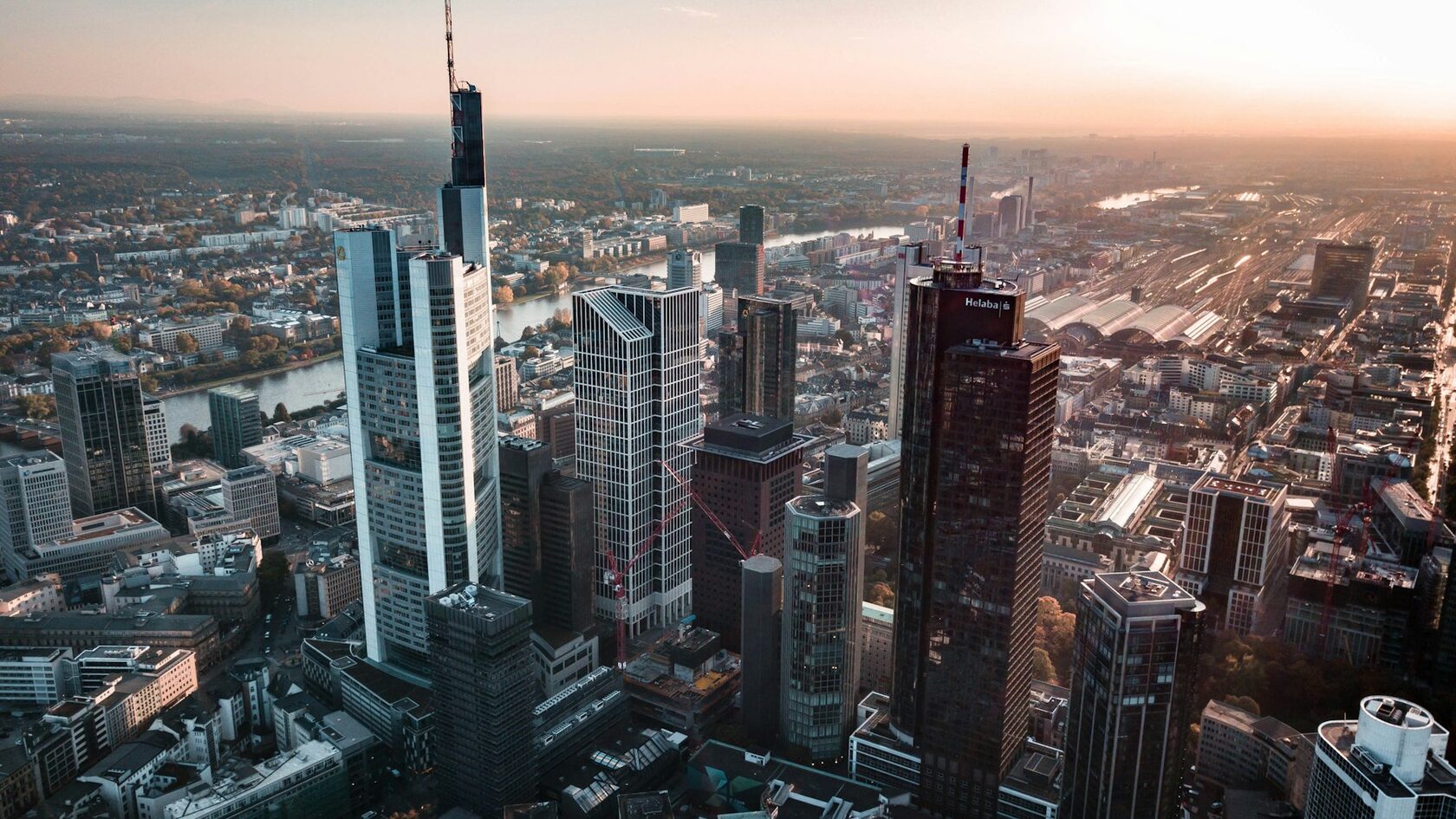
Photo: Jan-Philipp Thiele / Unsplash
This page is general information and not investment, legal or tax advice.