Completed Assets Or Properties Under Construction?
While funds, banks and investment groups tend to favour completed food retail assets — newly built properties already handed over under the official acceptance protocol — many sophisticated private investors sometimes prefer projects still under construction, provided that:
- the project is being delivered by a reputable developer,
- a building permit has been issued by the local authorities, and
- a long-term lease has been signed with a member of the Top-4 or, at minimum, one of Germany’s Top-20 food retailers.
Advantages of completed new-build assets
These benefits are straightforward:
- No construction or permitting risks — all potential force majeure issues related to approvals or construction works are already behind you.
- Immediate rental income — cashflow starts from day one.
There are essentially no drawbacks, except for one nuance mentioned further below.
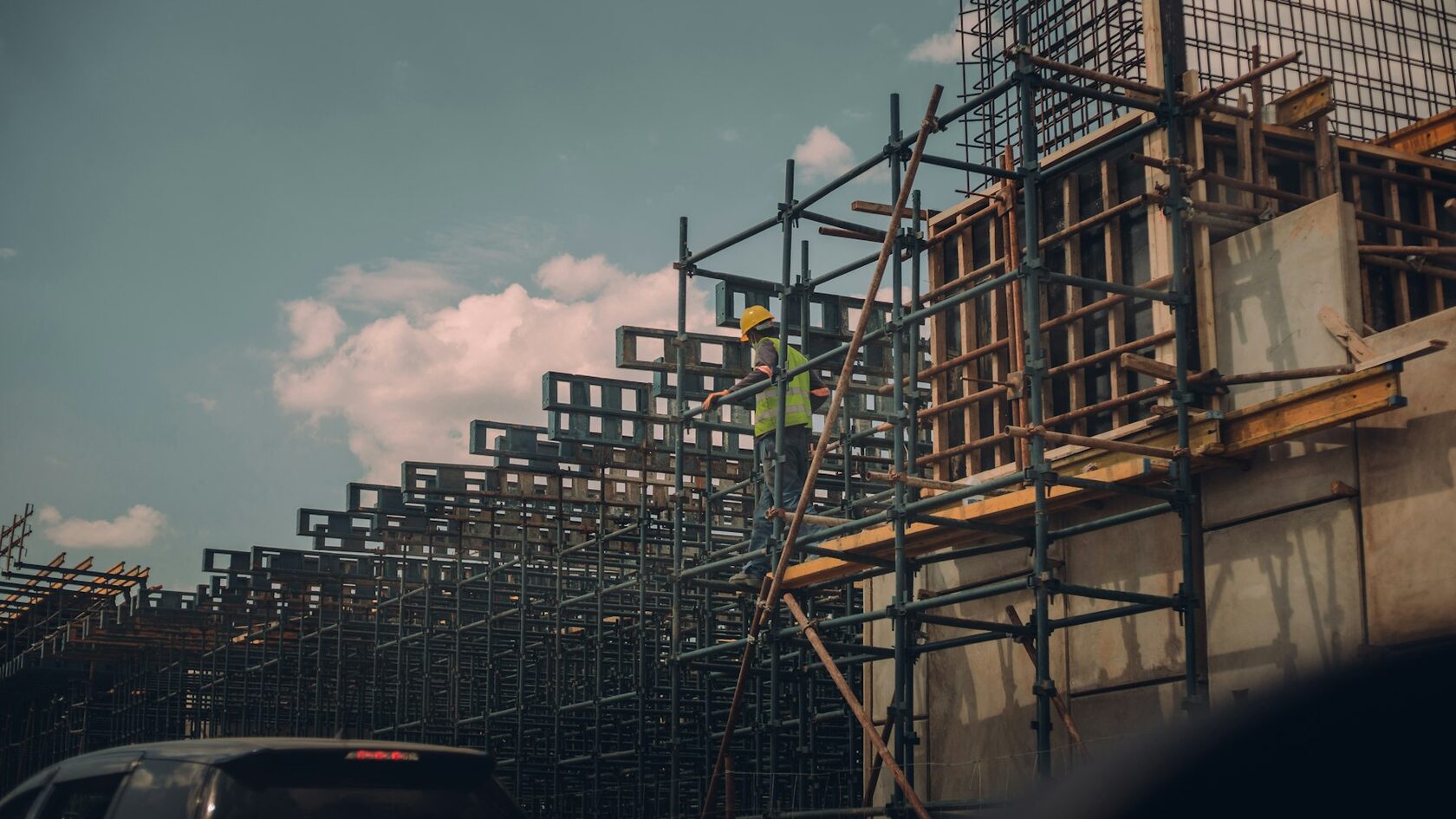
Advantages of acquiring projects under construction
For investors whose primary businesses generate steady, predictable cash flow, construction-phase acquisitions offer a compelling financial advantage:
the contract price is paid in instalments over roughly 12 months — the typical duration of the construction phase of a full-scale supermarket or retail centre.
For many entrepreneurs, it is far more comfortable to pay €2.5 million four times per quarter than to transfer €10 million in a single payment upon turnkey handover.
Full legal protection and transparency
German real estate law strictly prohibits advance payments — whether for residential or commercial property — under the fundamental principle that:
“The seller has no right to demand money for something that does not yet exist.”
As a result, construction-phase transactions are exceptionally transparent and secure:
- the developer typically acquires the land parcel at its own cost,
- then erects the building,
- issuing invoices to the investor only after completion of each of the four construction stages (a number explicitly defined in federal law).
This model protects buyers, ensures strict oversight, and makes staged acquisitions an attractive option for experienced private investors seeking both security and financial flexibility.
A separate point must be made about pricing.
When a developer delivers a project that is fully financed by the investor, there is no need to obtain bank financing. This eliminates the considerable costs of bank loans — arrangement fees, interest charges during construction, collateral valuation fees, monitoring fees and so on.
Because these costs disappear, the developer is able to reduce the contract price accordingly.
For the investor, the key point is simple:
do not forget to negotiate this discount with the seller.
Additional advantage: superior Risk Management
Projects in the design or construction phase have one important advantage over completed assets:
the investor can implement partial or full construction supervision.
Despite the popular stereotype of flawless German construction quality, reality — as in any other country — varies dramatically depending on the people involved and their attitude toward the work.
Some developers are run by dedicated perfectionists.
Others follow the principle: “Got the money? Goodbye!”
Germany’s federal law provides a five-year construction warranty, which protects the investor during the initial period of ownership. However, differences in construction quality and in the reliability of installed technical equipment inevitably begin to surface after those five years — at which point the owner becomes responsible for all repairs and replacements.
A decisive success factor: Know Your Developer
Thus, in addition to the core success factors —
- macro- and micro-location,
- financial strength and reliability of the tenant,
- duration and structure of the lease —
- another decisive element enters the equation:
- an in-depth understanding of the strengths and weaknesses of the developer delivering (or having delivered) the asset.
To paraphrase the well-known banking principle “Know Your Customer”, any investor selecting a new supermarket or retail centre in Germany must rigorously follow the rule:
“Know Your Developer.”
This factor is ultimately more important than the choice between a completed turnkey asset and a project still under construction.
Credits: Lidl, Schwarz-Gruppe