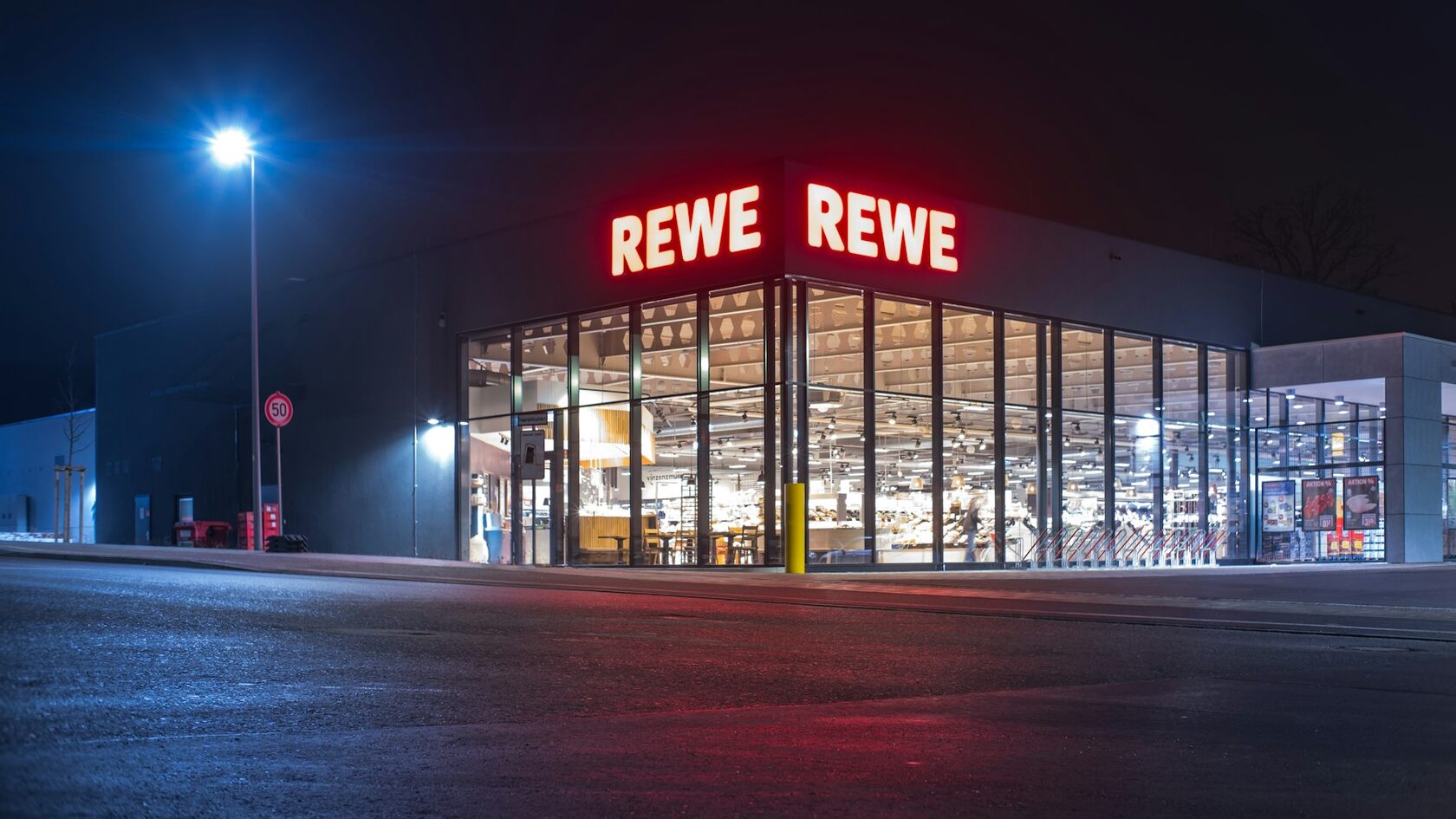
85% of Germany’s Food Retail Market Is Controlled by the “Big Four”
According to Colliers International, one of the world’s Top-5 real estate advisory firms, private and institutional investors have allocated the equivalent of USD 1 trillion into commercial real estate across Germany over the past 25 years. Between 2015 and 2022, annual investment volumes consistently exceeded €50 billion. The all-time high was recorded in 2019, when domestic and international capital flows reached an “astronomical” €71.6 billion.
While institutional investors — including investment funds, banks and insurance groups — traditionally prioritise capital-intensive asset classes such as office buildings, logistics facilities and large-scale residential rental portfolios ranging from €10 million to nearly €1 billion per single asset or portfolio, wealthy private investors have long shown a different preference.
For high-net-worth individuals, the most favoured investment category in Germany has always been food retail properties — supermarkets and retail centres — typically priced between €3 million and €20 million, provided they are leased on a long-term basis to tenants from Germany’s Top-10 food retail groups, and ideally to one of the Top-4 market leaders.
Why exactly these tenants?
According to the German Federal Cartel Office (Bundeskartellamt), 85% of the country’s grocery retail market is controlled by just four players — the so-called Big Four, all German-rooted multinational retail groups:
While institutional investors — including investment funds, banks and insurance groups — traditionally prioritise capital-intensive asset classes such as office buildings, logistics facilities and large-scale residential rental portfolios ranging from €10 million to nearly €1 billion per single asset or portfolio, wealthy private investors have long shown a different preference.
For high-net-worth individuals, the most favoured investment category in Germany has always been food retail properties — supermarkets and retail centres — typically priced between €3 million and €20 million, provided they are leased on a long-term basis to tenants from Germany’s Top-10 food retail groups, and ideally to one of the Top-4 market leaders.
Why exactly these tenants?
According to the German Federal Cartel Office (Bundeskartellamt), 85% of the country’s grocery retail market is controlled by just four players — the so-called Big Four, all German-rooted multinational retail groups:
Schwarz Gruppe, REWE Group, EDEKA Gruppe, and ALDI.
Collectively, these companies operate 47,000 supermarkets across more than 30 countries, employ 1.7 million staff, and generate a combined annual turnover of €420 billion (2023).
Below is a concise overview of each:
Schwarz Gruppe
- Founded: 1930
- Headquarters: Neckarsulm
- Global footprint: 13,760 stores in 32 countries
- Employees: 575,000
- Brands: Lidl (discounters), Kaufland (discount hypermarkets)
- 2023 revenue: €167.2 billion
REWE Group
- Founded: 1927
- Headquarters: Cologne
- Operations: 12,100 stores in 21 countries
- Employees: 384,000
- Brands: REWE XL hypermarkets; REWE supermarkets; Penny and Billa discounters; toom Baumarkt DIY stores; travel agencies
- 2023 revenue: €90.9 billion
ALDI
- Founded: 1913
- Headquarters: Essen (ALDI Nord) & Mülheim (ALDI Süd)
- Operations: 10,300 stores in 18 countries
- Employees: 273,000
- Brands: ALDI Nord, ALDI Süd
- 2023 revenue: €85.2 billion
EDEKA Gruppe
- Founded: 1898
- Headquarters: Hamburg
- Operations: 10,950 stores in 7 countries
- Employees: 408,000
- Brands: E-Center hypermarkets, EDEKA supermarkets, Netto discounters
- 2023 revenue: €75.4 billion
Despite being the smallest of the Big Four by global scale, EDEKA dominates within Germany, holding a 23% share of the domestic grocery market — the largest among all players.
Is There “Life” Beyond the Big Four?
Absolutely.
Germany’s Top-20 food retailers include numerous strong regional and national chains generating €1+ billion in annual revenue.
Beyond food, two giants of the drugstore segment — DM (ranked 5th) and Rossmann (6th) — form a powerful parallel universe of everyday consumer demand:
- DM: €15.1 billion revenue (2023), 4,036 stores in 13 countries
- Rossmann: €13.9 billion revenue (2023), 4,713 stores in 9 countries
Credits: Kaufland, Schwarz-Gruppe