Where To Invest And Why Not All Investors Favour Locations In Big Cities
Germany’s seven “A-class” cities — Berlin, Munich, Hamburg, Frankfurt, Cologne, Düsseldorf and Stuttgart — appear highly attractive as macro-locations for acquiring food retail assets: they offer dense populations and a high degree of liquidity, allowing investors to convert premium assets back into cash with relative ease.
However, the flip side is significant:
a large concentration of competing investors, extremely high land prices in established districts, and a substantial “metropolitan premium” that sellers automatically embed in pricing for local discounters, supermarkets and retail centres. These factors compress returns to levels that can only be described as ultra-conservative.
Is it worth paying the premium?
Many market participants still believe it is.
Yet an increasing number — including experienced institutional investors — believe the opposite. As a result, both private and institutional capital have, in recent years, shifted their focus toward B-class cities (250,000–600,000 residents), C-class cities (200,000–250,000 residents) and even D-class markets (100,000+ residents).
And for some investors, the search goes even further.
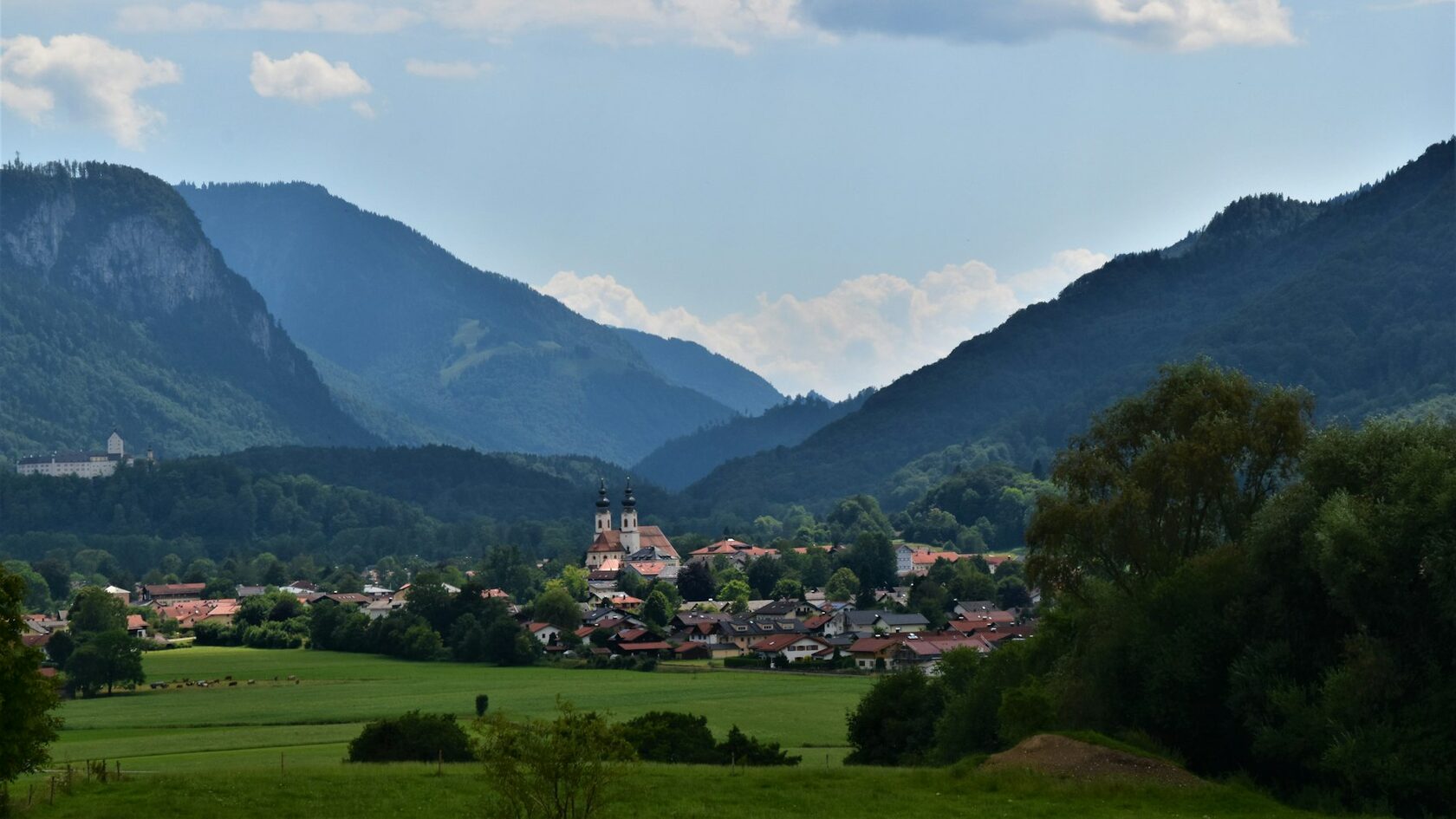
Many wealthy private investors — those who intend to hold their assets for 15+ years — often own newly built full-range supermarkets operated by EDEKA or REWE, with rental areas of 1,500–2,000 sqm, located in the historical centres of small towns of 5,000–20,000 residents, or even in classic German villages of under 5,000 residents in affluent regions of southern, western and central Germany.
Why pursue this strategy?
1. Higher yields
Compared to metropolitan assets, food retail properties in smaller cities and affluent rural markets benefit from significantly lower land acquisition costs, resulting in noticeably higher net initial yields.
2. Wealthier population — counterintuitive but true
Germany is a decentralised country.
This manifests itself not only in local governments operating autonomously from Berlin, but also in the fact that per-capita purchasing power in wealthy towns and villages of Bavaria, Baden-Württemberg, Hesse or Rhineland-Palatinate often exceeds that of major cities.
A large rural town or district capital is typically surrounded by 5–10 smaller villages, each hosting only small discounters such as Netto or Penny (offering 1,500–4,500 SKUs), and none of which qualify — due to insufficient population — for a full-range supermarket such as REWE or EDEKA (15,000–40,000 SKUs).
The investor’s advantage
An investor who owns a premium full-range supermarket built in a strategically dominant location — for example, the town hall square — and operating as the largest food retail store in the entire micro-region (by assortment, size and parking capacity) enjoys an exceptionally high level of long-term security.
In many cases, this security is not merely long-term but practically indefinite, given the store’s monopoly position in its catchment area and the consistently strong demand for full-range supermarkets in Germany’s prosperous non-urban markets.
Credits: Kaufland, Schwarz-Gruppe